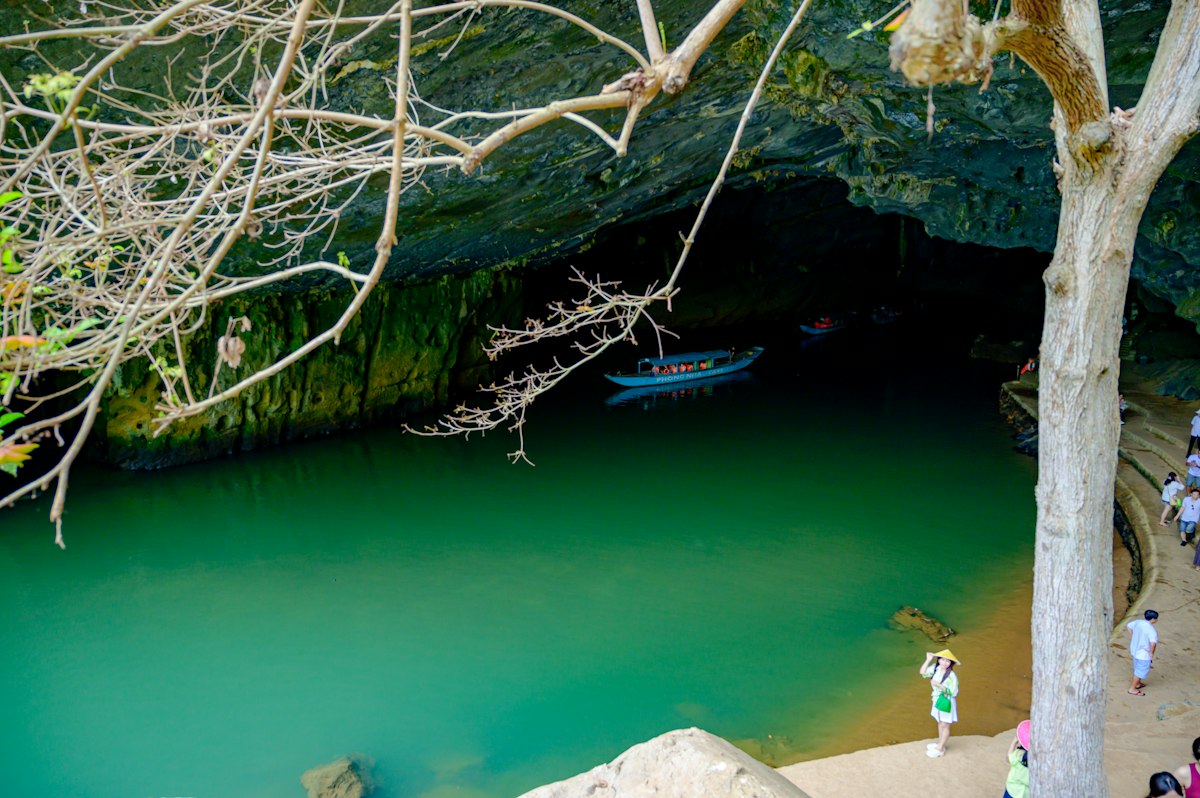
A UNESCO World Heritage Landscape
Phong Nha-Ke Bang National Park protects one of the most remarkable karst landscapes in Asia. Located in Quang Binh Province in north-central Vietnam, close to the border with Laos, it was inscribed as a UNESCO World Heritage Site for its outstanding geology and, later, its biodiversity. At its heart is a vast limestone massif riddled with caves, underground rivers and sinkholes, formed over hundreds of millions of years.
The park covers a large area of mountains and forest, much of it difficult to access and still being surveyed. It is this combination of scale, remoteness and geological richness that has made the region a magnet for cave explorers and, more recently, adventure travellers.
How the Caves Were Formed
The story begins with limestone laid down as ancient seabeds, later uplifted and folded into mountains. Over immense spans of time, slightly acidic rainwater and rivers dissolved the rock along cracks and faults, slowly carving out passages, chambers and the underground drainage system that defines the area today. Where cave ceilings collapsed, they formed dolines — the huge skylights that, in Son Doong, allow entire patches of jungle to grow underground.
The result is one of the oldest and most complex karst regions on Earth, with caves ranging from modest passages to Son Doong, the largest known cave in the world. New caves and connections are still being discovered, and the full extent of the system is not yet mapped.
Wildlife and Forest
Above ground, the park is cloaked in tropical forest that shelters a rich variety of wildlife, including primates, birds and countless plant species, some found nowhere else. The caves themselves host their own specialised life, from the swallows that give Hang En its name to fish and insects adapted to life in the dark. Because much of the park is remote and protected, it remains an important refuge for species under pressure elsewhere in the region.
Visitors on cave tours pass through this living landscape on the trek to and from the caves, walking jungle trails, crossing rivers and sometimes passing through the lands of local minority communities.
People and History
The region has long been home to local communities whose knowledge of the landscape has been central to its exploration — it was a local man, Ho Khanh, who first found the entrance to Son Doong. During the twentieth century the wider area saw significant historical events, and today the caves are the foundation of a growing, community-linked adventure tourism economy centred on Phong Nha village.
Managing tourism carefully is a priority: visitor numbers to the most sensitive caves are capped, tours are licensed, and a portion of the activity supports local employment as guides, porters and cooks. This model aims to balance access with the protection of a fragile, globally important environment.
Visiting Responsibly
Everything that makes the park special — its caves, forests and wildlife — is also vulnerable. As a visitor, the most important things you can do are to travel with licensed operators, stay on established routes, carry out all your waste, and follow the guidance of your guides. Treating the caves and forest with care ensures they remain in good condition for the explorers and travellers who come after you.
Explore the Park's Caves
Ready to see it for yourself? Start with our tours overview, or read the detailed guides to Son Doong, Tu Lan and Hang En. When you are ready to plan the practicalities, the planning guide has you covered.