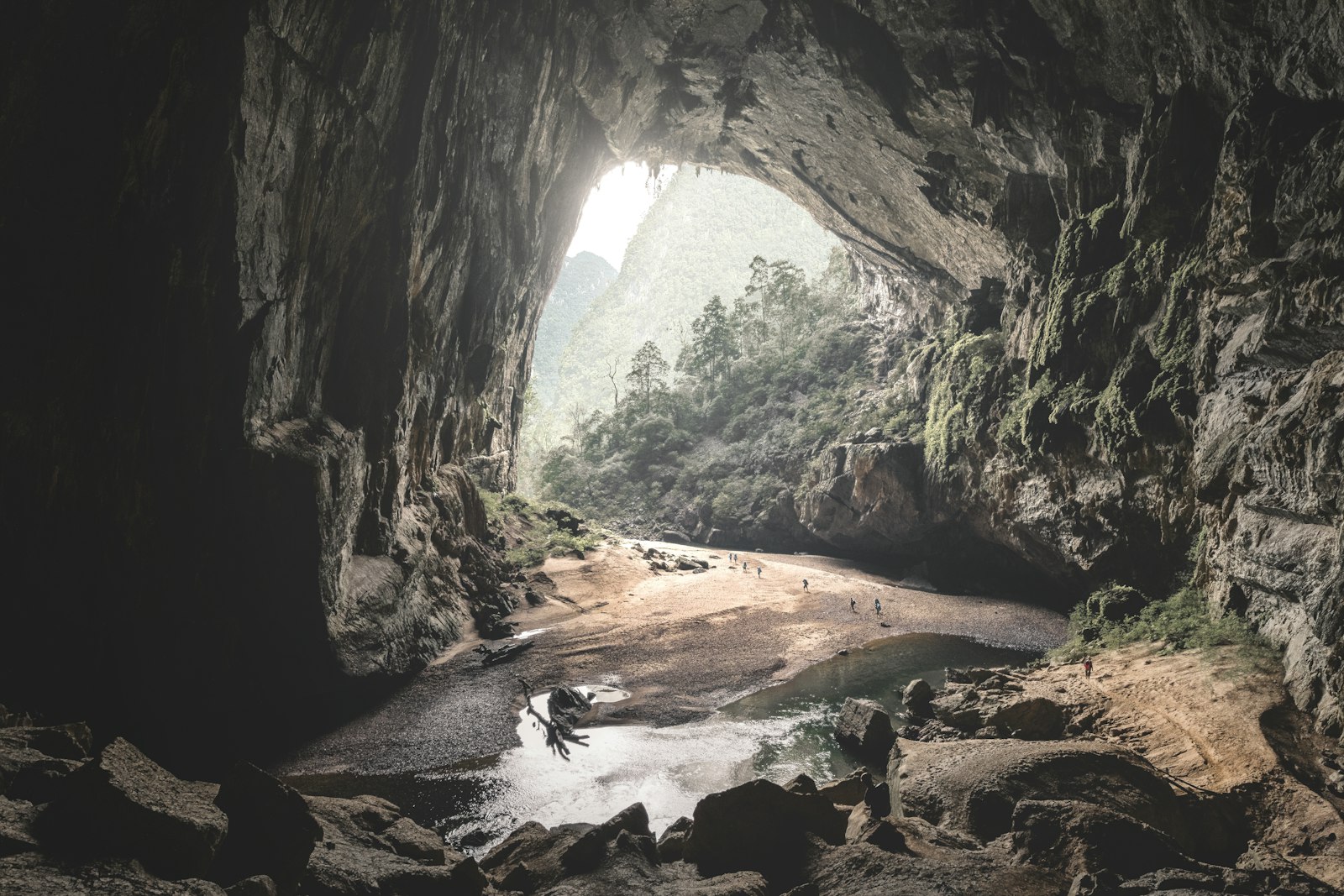
What Is Son Doong Cave?
Son Doong, whose name is often translated as "mountain river cave", is the largest known cave passage on the planet by volume. It lies deep within Phong Nha-Ke Bang National Park in Quang Binh Province, north-central Vietnam, hidden beneath dense jungle near the border with Laos. Its main passage stretches for several kilometres and, in places, is large enough that a block of skyscrapers could stand inside it.
The scale is difficult to convey with numbers alone. The cave reaches roughly 200 metres high and around 150 metres wide in its largest sections, and the surveyed passage runs for about nine kilometres. What makes Son Doong extraordinary is not only its size but what that size makes possible: an entire self-contained environment sealed away underground, with features you would normally expect to find outdoors.
How Son Doong Was Discovered
A local man named Ho Khanh first came across the cave entrance in 1991 while sheltering in the jungle, drawn by the sound of a river rushing underground and a strong wind blowing from the opening. The entrance was steep and intimidating, and in the years that followed its exact location was lost.
It was not until 2009 that the cave was properly explored, when Ho Khanh guided members of the British Vietnam Caving Expedition Team back to the entrance. The team pushed through the passage and confirmed the enormous scale of what they had found, establishing Son Doong as the largest cave passage known anywhere. That expedition laid the groundwork for the carefully controlled tourism that exists today.
Inside the Cave: A World of Its Own
What sets Son Doong apart is its internal landscape. At two points along the passage, the ceiling has collapsed to form vast openings known as dolines. These let daylight pour in, and where the light reaches the cave floor, pockets of jungle have taken root — complete with tall trees, ferns and their own small populations of wildlife. Walking from the darkness of the cave into these sunlit gardens is one of the defining moments of the trip.
Other features include:
- An underground river that carved the cave over millions of years and still flows through it, requiring wading and, at times, swimming.
- Enormous stalagmites, some among the tallest recorded anywhere, along with delicate cave pearls formed in shallow terraced pools.
- The "Great Wall of Vietnam", a towering calcite barrier near the far end of the cave that must be climbed with rope assistance to reach the final chamber.
- Clouds and mist that can form inside the largest chambers, where the internal atmosphere behaves almost like its own miniature weather system.
How the Permit System Works
Because Son Doong is a fragile and globally significant site, access is strictly limited by the Vietnamese authorities. Tours are operated under an exclusive licence held by a single permitted operator, working in partnership with the caving experts who surveyed the cave. There is no way to visit independently, and the number of permits issued each season is deliberately capped to protect the cave environment and manage impact.
On booking and prices: Because places are so limited, the expedition is often reserved many months ahead, and prices vary by season. We do not publish prices here — always confirm current availability, dates and costs directly with the licensed operator.
What the Expedition Involves
A Son Doong trip is a full wilderness expedition, typically run over about six days and five nights. It begins with a trek through the national park jungle, followed by an overnight stop at Hang En, itself one of the largest caves in the world, before continuing on to Son Doong. Inside, you camp on sandy floors within the cave, moving deeper over the following days.
Days are physically demanding. You will trek across uneven ground, scramble over boulders, wade and swim through the cave river, and negotiate rope-assisted sections including the climb over the Great Wall of Vietnam. A large support team — guides, safety personnel, porters and cooks — travels with each group, carrying equipment and preparing meals at camp. Groups are kept small, both for safety and to limit pressure on the cave.
Who Should Attempt Son Doong?
Son Doong is graded as a challenging expedition, and it genuinely earns that grade. It suits travellers who:
- Are in good general fitness and used to multi-day physical activity.
- Are comfortable trekking long days, scrambling over rock and swimming through cave rivers.
- Have a reasonable head for heights for the rope-assisted climbs.
- Are happy to camp in remote conditions without everyday comforts.
If that sounds beyond your comfort zone, it is worth remembering that Phong Nha offers many other caves at gentler grades. Our difficulty guide explains how the tours compare, and Hang En in particular is a superb, less demanding alternative.
Best Time to Visit
Expeditions run in the dry season, generally from around February to August. Outside this window, rising water levels and the risk of flooding make the cave river dangerous, so tours pause during the autumn and winter. Even within the season, conditions vary, and the operator sets the available departure dates. Because the trip is booked so far ahead, it pays to plan your travel around the dates you can secure rather than the other way around.
How Son Doong Compares
Son Doong is the headline, but it is not the only remarkable cave in the region, and it is not the right choice for everyone. Hang En, visited on the way in, can be booked as a shorter overnight trip. The Tu Lan system offers river-caving adventures from one to five days, and there are family-friendly day tours for those travelling with children or short on time. Deciding between them comes down to your fitness, your budget and how much time you have.
Frequently Asked Questions
The Son Doong tour is a multi-day expedition, typically run over about six days and five nights, including the trek in and out through the jungle and several nights camping inside and around the cave. It is not a day trip or a quick visit; the itinerary is built around the time it takes to travel through the cave safely on foot.
Son Doong is a premium, permit-limited expedition and the price reflects the guides, porters, safety teams and equipment involved. Prices change from season to season, so we do not publish a figure here. Check current pricing directly with the licensed operator, and be aware that places are limited and often booked far in advance.
Access to Son Doong is tightly controlled by the Vietnamese authorities to protect the cave. Tours are run under an exclusive permit by a single licensed operator, working alongside the caving experts who surveyed the cave. Independent or self-guided visits are not permitted, and the number of visitors each year is deliberately capped.
Son Doong is graded as a challenging expedition. You should be in good physical condition, comfortable with long days of jungle trekking, scrambling over rocks, wading and swimming through cave rivers, and climbing rope-assisted sections including the wall near the end of the cave. A reasonable head for heights and multi-day camping stamina both help.
Expeditions run during the dry season, generally from around February to August. The cave and the rivers around it are affected by the wet season, so tours pause during the autumn and winter flood period. Confirm the current operating window and available dates with the operator when you plan your trip.
Son Doong contains its own underground ecosystem: two huge collapsed sections called dolines let in daylight, allowing patches of jungle to grow inside the cave. There is a fast-flowing underground river, towering stalagmites, cave pearls, and a large calcite barrier nicknamed the Great Wall of Vietnam. Clouds sometimes form inside the largest chambers.
The expedition is run with a large support team of guides, porters, cave experts and safety staff, and uses proper caving equipment such as helmets, headlamps and harnesses. That said, it is a remote wilderness expedition with real physical demands and hazards. Following the guides' instructions and being honest about your fitness are essential parts of staying safe.
Hang En is a huge cave in its own right and is actually visited on the way to Son Doong, but it can also be booked as a shorter, standalone overnight adventure. Son Doong is far larger and longer, requires a full multi-day expedition, and is limited by a strict permit. Many people who cannot commit to Son Doong choose Hang En instead.
Continue planning: compare every trip on our tours overview, understand the grades in the difficulty guide, or get the logistics right with our planning guide.