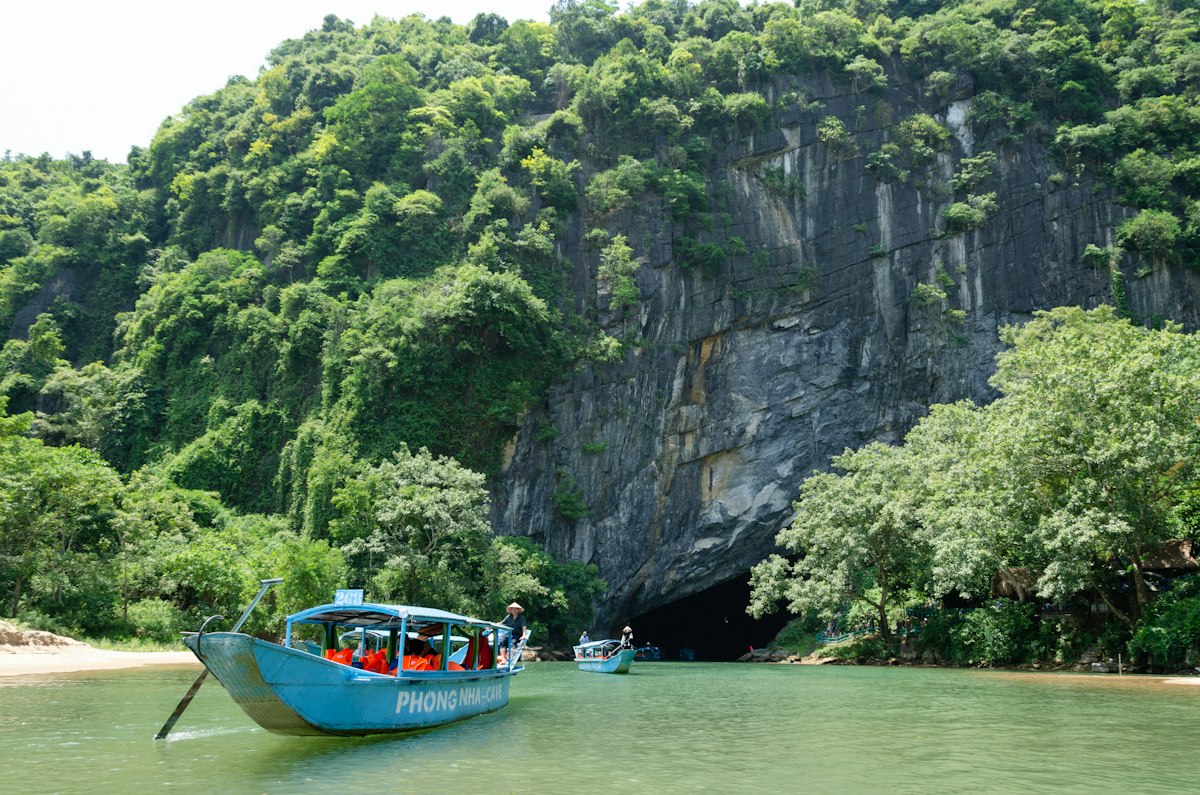
When to Visit Phong Nha
Timing matters more here than at many destinations, because the caves are directly affected by the weather. The dry season, roughly February to August, is the main window for adventure tours. During these months water levels in the river caves are manageable, trails are passable, and the multi-day expeditions run on a regular schedule.
From around September to January the region enters its wet season, and the risk of flooding rises. Many of the river-based and multi-day tours — including Son Doong, Tu Lan expeditions and Hang En — pause during this period for safety. If your heart is set on a specific cave, plan your trip within the dry season and confirm the current operating dates with the operator before booking flights.
How to Get to Phong Nha
The gateway to the region is the city of Dong Hoi, in Quang Binh Province. From there, Phong Nha village — the base for most tours — is about 45 minutes away by road.
- By air: Dong Hoi has an airport with domestic connections to major Vietnamese cities. This is the fastest way in for most international visitors, who typically connect through Hanoi or Ho Chi Minh City.
- By train: Dong Hoi sits on Vietnam's North-South railway, so it is reachable by train from Hanoi, Hue, Da Nang and beyond. The overnight sleeper services are a popular, scenic option.
- By road: buses and private transfers connect Dong Hoi and Phong Nha with nearby cities such as Hue. Many hotels and operators can arrange transfers.
Where to Stay
Most adventurers base themselves in Phong Nha village, which has grown a relaxed traveller scene with guesthouses, homestays and small hotels, plus restaurants and cafes. It puts you close to the tour meeting points and the national park. Dong Hoi, on the coast, offers a wider range of hotels and is convenient if you are arriving late or leaving early. Some multi-day tours include accommodation before or after the trip — check what your itinerary covers.
Fitness and Preparation
The right preparation depends entirely on the tour you choose. Day and family tours ask little more than the ability to walk for a few hours and swim gently. Moderate trips such as Hang En or the Tu Lan expeditions require a good level of general fitness and comfort in the water. Challenging expeditions such as Son Doong demand real stamina, the ability to scramble and climb with rope assistance, and a head for heights.
Whatever you book, arriving fit makes the experience far more enjoyable. In the weeks before your trip, build up your walking and cardio, and if your tour involves swimming, get comfortable spending time in the water. Our difficulty guide sets out what each grade involves so you can prepare accordingly.
What to Pack
Operators usually provide the specialist caving gear — helmets, headlamps, harnesses and life jackets — and often supply gaiters and sleeping equipment for overnight trips. What you bring yourself typically includes:
- Quick-drying clothing that you do not mind getting wet and muddy.
- Sturdy footwear with good grip; some operators provide trekking shoes designed for wet caving.
- A change of dry clothes for camp, plus warm layers, as caves can be cool.
- Personal items: sun protection, insect repellent, any personal medication and toiletries.
- A dry bag for electronics, though photo opportunities may be limited by the conditions.
Your operator will send a detailed packing list tailored to the specific tour — follow it closely, as space and weight are limited on expeditions.
Booking and Permits
Popular tours, especially Son Doong, are limited by permit and sell out far in advance, sometimes close to a year ahead. Less demanding day and family tours can often be arranged with less notice, but during peak season it is still wise to book ahead. Because availability, prices and permit rules can change, always confirm the current details directly with the licensed operator.
A note on prices: This is an independent guide and we do not sell tours or publish prices. For current costs, dates and booking, contact the operator directly.
Health, Safety and Responsible Travel
Adventure caving carries real risks, and the tours are physically demanding and remote. Be honest with your operator about your fitness and any medical conditions, listen carefully to your guides, and never stray from the group. Travel insurance that covers adventure activities is strongly recommended. The caves are fragile environments protected within a UNESCO World Heritage Site — stick to marked routes, carry out everything you bring in, and follow the leave-no-trace guidance your guides provide.
Money and Practicalities
The local currency is the Vietnamese dong (VND). Phong Nha village is small, so carry some cash for meals, drinks and incidentals, and confirm accepted payment methods for your tour when you book. English is spoken at many traveller-facing businesses and by tour guides, though learning a few Vietnamese phrases is always appreciated.
Putting It All Together
Once you have chosen your dates and your tour, the rest falls into place: book the tour first if it is permit-limited, then arrange travel to Dong Hoi and on to Phong Nha, and finally sort accommodation for the nights either side of your trip. For inspiration on which cave to choose, browse the tours overview or read about the Son Doong, Tu Lan and Hang En experiences in detail.